
Add Client adds a client to Seamlss by hand: it creates their record and nothing else. The client isn’t contacted, asked for details, ID checked or sent a letter.
To onboard a client, so they fill in their own details, verify their ID and sign your engagement letter, follow Onboard your first client. The Onboard Client tab in Seamlss points you to the same place: a client request.
In Seamlss: Client Management, Clients, Add Client.
Open ClientsIs this the right way? Onboarding a new client? Use Onboard your first client. Many clients at once? Use Bulk imports.
Add a client #
Open Add Client
Go to Clients and select the Add Client tab.
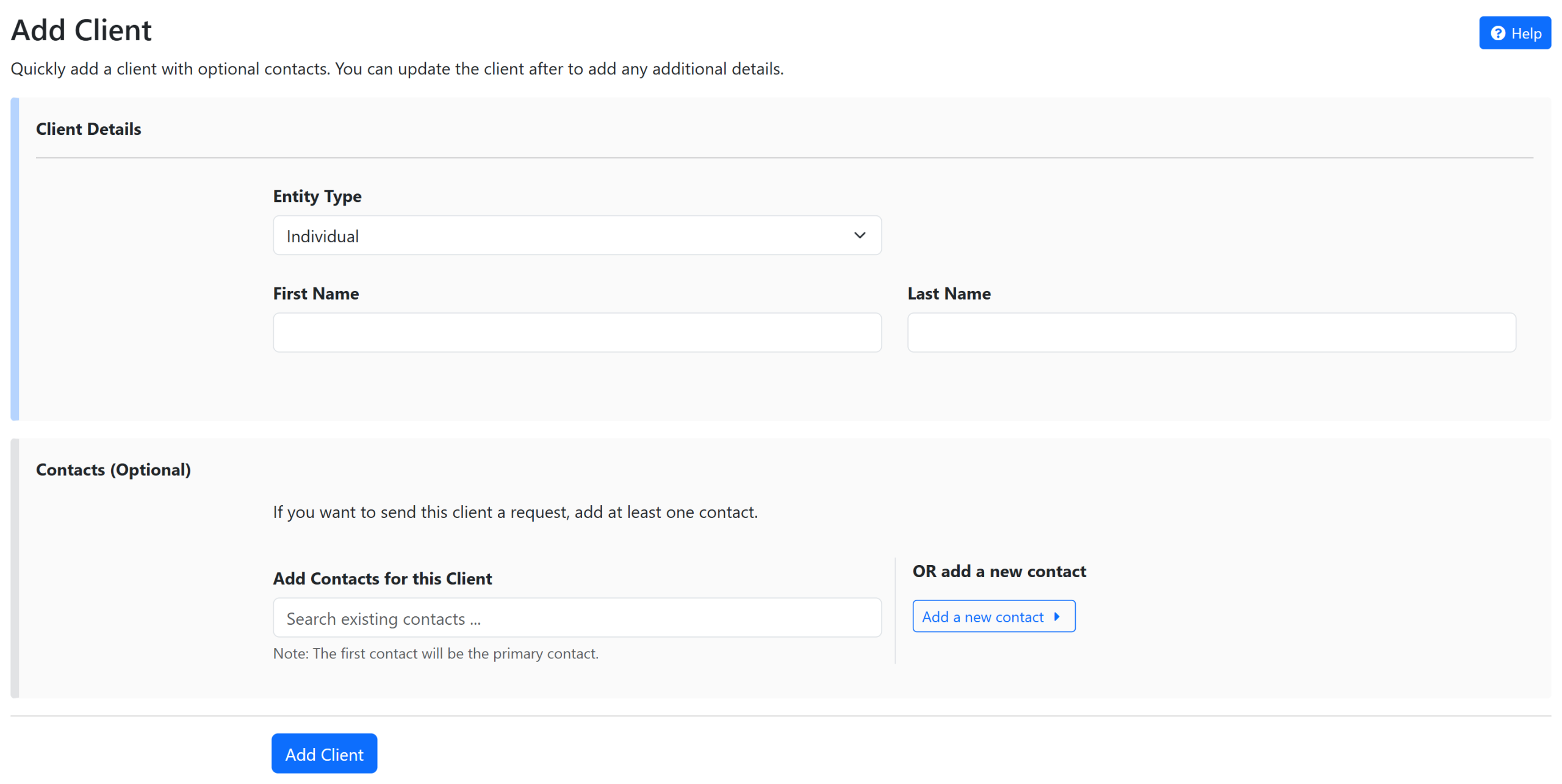
Choose the entity type
Individual, Company, Sole Trader, Partnership, Trust, Trust with Trustee Company, SMSF, Unit Trust, Not for Profit, Estate, Club or Society, Government Entity or Other. The name fields change to suit. Get it right now: it decides what a request can ask for later.
Add a contact
The section says optional, but a client with no contact can’t be sent anything. Search an existing contact, or select Add a new contact. The first contact becomes the primary contact.
Select Add Client
The client appears in the List tab. Open the record to add an ABN, addresses or groups, or send a client request with Entity Forms so the client fills them in.
Each person needs their own email and mobile. Two people sharing one address is the most common reason a client can’t log in or verify their identity, because Seamlss can’t tell whose reply is whose. See when two people share an email.
Something not working? #
The client saved but I can’t send them anything
No contact is attached. Open the record and add one.
A duplicate client appeared
They may already exist under a slightly different name, or have come across from XPM. Search before adding, including archived clients.
The entity type is wrong
Change it on the client record. You don’t need to delete and start again.
Still stuck? Contact support and tell us what you see.


